Melbourne Rare Book Week day 2

Melbourne Rare Book Week Friday 25 July 2025

There were five events on Friday. I was at two of them.

I did not get to sketch this event, as I was presenting. I will be recording this presentation in the next week or so.

The First Catalogue of the Supreme Court Library of Victoria (1861)

The Law Library Victoria

Speaker: Alissa Duke

Reference librarian Alissa Duke will explore some of the unique and noteworthy titles acquired during the early years of the Supreme Court Library, after it was established by Redmond Barry in 1853. These early acquisitions by the Library highlight and reflect the interests and needs of Victorians and the Victorian legal profession at that time, and encompass rare and specialised subject matter. Interestingly, a number of these early acquisitions continue to be published, and are purchased and used by the legal profession

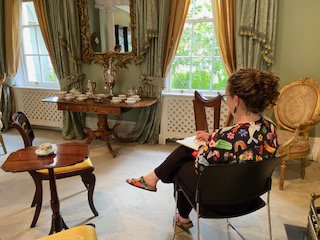
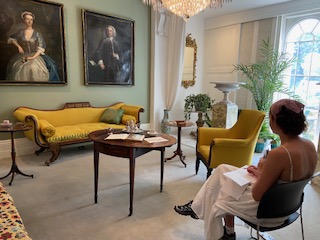
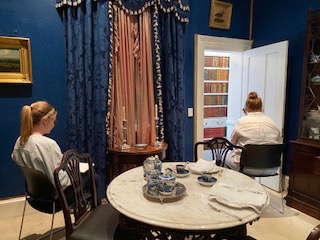
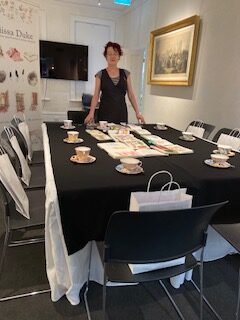
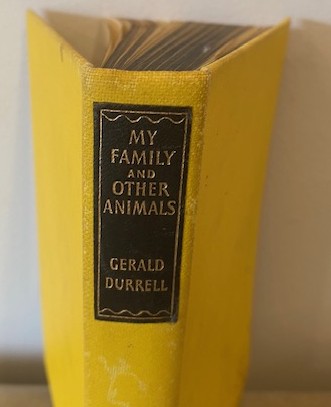
Setting up the day before. Book Pillows out to display : some non-legal books

  • BENTHAM’S Introduction to the Principles of Morals and Legislation, new edition 1823
  • CABALA, sive Scrinia sacra : mysteries of state and government in letters of illustrious persons 1663
  • PUFFENDORFS Law of nature of Nations 1749
  • DOCTOR and student by Muchall 1815
  • BURKE’S A Genealogical and heraldic dictionary of the peerage and baronetage of the British Empire. 1860
  • CATALOGUE of the London traders, tavern, and coffee-house tokens current in the seventeenth century   Burn, Jacob Henry.  London : printed for the use of the members of the Corporation of the City of London, 1855.
  • POGONOLOGIA: Or A Philosophical And Historical Essay On Beards 1786

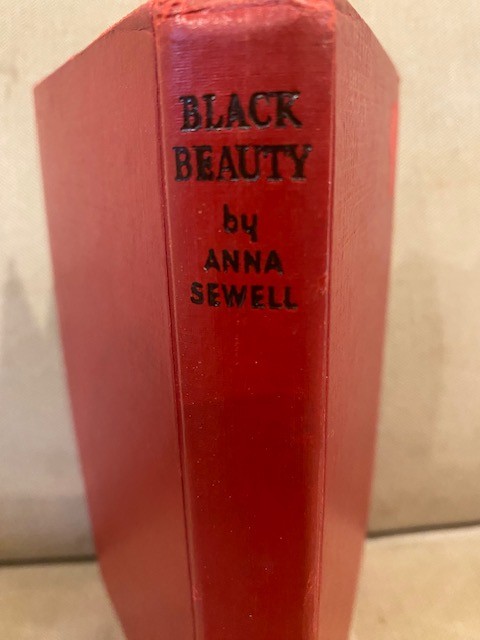
and some legal books – we have been purchaseinf McGregor on Damages soince 1812 and still purchase the current 2024 edition, We do not discard books. so have every edition. I had them out on display

The Enigmatic Mr Pepys

Royal United Services Institute of Victoria

Speaker: Major General (Ret’d) Michael O’Brien

Samuel Pepys was a keen observer of daily life in Restoration England. Rake, book collector, Fellow of the Royal Society and father of the Royal Navy, his legacy lasts to this day. Through his diary – first printed 200 years ago – millions of readers have relived the Restoration, the Fire of London, the Plague, and other important events of the period. Aside from historical events, Pepys’ diaries reveal life and manners, costume and song, court intrigues, food and drink and the tangible atmosphere of multi – layered London. Join Mike O’Brien as he explores this enigmatic polymath and book collector.

Presented by: Royal United Institute Services Victoria

Melbourne Rare Book Week Day 1

Over 45 events between 24 July and 2 August in the 11 th year of the Melbourne Rare Book Week. , culminating in the Melbourne Rare Book Fair , in its 51st year. All events are free. Have been the official sketcher on location since 2016. Each year I take the week off work and sketch at as many events as I can, sharing my sketches with the MRBW and MRBR Teams and the organisations that I sketch at for them to use in any social media.

I will be doing a blogpost every few days or maybe everyday, as I keep my own personal record of the events. On my sketchbook pages I sketch on location, and write the event name, place, organisaiton etc.

On my blog posts, I will also add the information about the session from the MRBW program descriptions.

This is as much about sharing with you as about keeping my own record. I hope/plan to write my own thoughts about my time at these events,

Melbourne Rare Book Week Day 1 Thursday 24 July 2025

I attended two of the three events

William Strutt’s Victoria the Golden: Sketches of Early Melbourne

Victorian Parliamentary Library

Speaker: Alisa Bunbury

Victoria’s Parliamentary Library is the second oldest library in Victoria. The highlight of its collection is William Strutt’s illustrated album Victoria the Golden. Strutt arrived in Melbourne in 1850 and captured key events in the colony, from the goldrush to the departure of the Burke and Wills expedition. Later, in England, he compiled his sketches into albums, aware of their historical importance. Join Alisa Bunbury, art historian and curator, to learn about Strutt and his years in Victoria, followed by a rare viewing of the album, alongside other Strutt material held by the Library.

Victorian Parliamentary Library. The parliamentary library was completed in 1861. It continues as a fully functional library used by members of Parliament and staff. The parliamentary library holds more than 50,000 books, and reports.

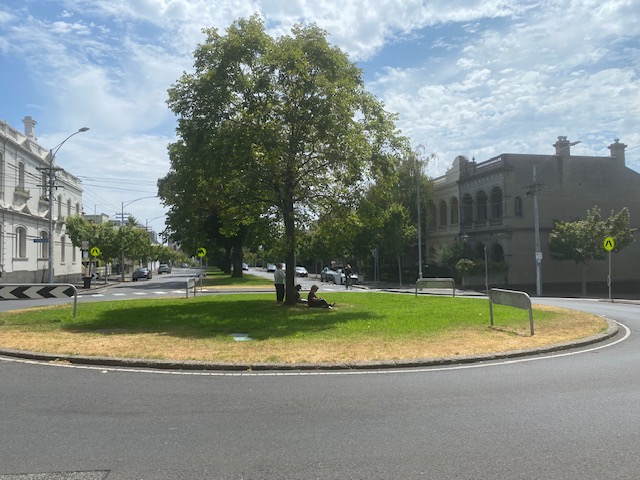
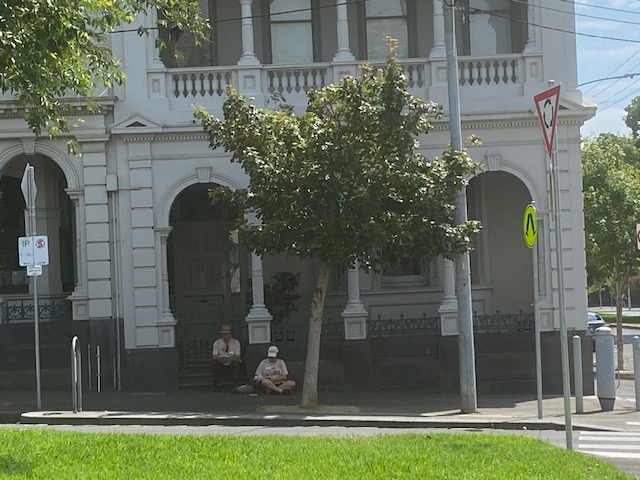
I was invited to arrive early to sketch inside. I have been to Parliamtary Library a few times as a Librarian and for MRBW. I arrived very early and sketched for 30 minutes outside.

I was then shown around the rooms that were going to be used and sketched.

Tha talk – fascinating.

Viewing the books – people moved a lot around the viewing tables, where library staff explained what was on display

Melbourne Rare Book Week Day 1 Thursday 24 July 2025

Doctors in Melbourne in the Time of La Trobe

The C J LaTrobe Society

Speaker: Dr Jonathan Burdon AM MD FRACP

Join historian Jonathan Burdon for this illustrated lecture as he delves into the early medical practitioners in Melbourne and the Port Phillip District of New South Wales (now Victoria) – who they were, where they came from, their experiences in town and country, and their notable contributions to the Colony.

Presented by: The C.J. La Trobe Society
at Tonic House, 386 Flinders Lane, Melbourne

Charles Joseph La Trobe was so controversial in so many ways. Relatively little is popularly known about him, and yet he achieved so much during his tenure as Superintendent of the Port Phillip District and as Lieutenant-Governor of the colony of Victoria.

The official first evening talk is presented by the La Trobe Society. It begins with drink and food and chatting to lots of friends, familiar faces and new people.

It is an incredibly busy week and I will gradually add all of my sketches, and thoughts.

I add them to Instagram daily alissaduke1 and Facebook Alissa Duke Art.

Paris sketchbook from home

Last week I posted my sketches from 2007 one week Paris holiday. This week I am revisiting that holiday in a 2012 Sketchbook Project, with the theme Travelogue. See it HERE

In 2012 I was asked to write a blog post on my travel sketching Travelogue by the amazing Cathy Johnson, who introduced me to watercolour pencil. Today, I am posting this 2012 blog. It is as relevant and meaningful to me now as it was then.

At the end of today’s post I reflect on where I am now in 2025.

Thursday, October 11, 2012

Travel sketchbook thoughts : Alissa Duke

Thoughts on creating my Travel Sketchbook

I have had these thoughts going through my head for a while and I wanted to put them in an organised version on paper. The catalyst has been the Sketchbook Project that I am working on this year (more about that later) and wanting to share my learning experience anyone else who is interested.

Looking back, I always enjoyed reading books that were illustrated travel journals and sketchbooks. I enjoyed them for their illustrations as well as reading about other people’s travels. They are always more interesting if they are about a city or country I want to or have visited, especially the United Kingdom ( I am in Australia).

This interest began many years ago with books such as David Gentleman’s Britain (and many others in the series) and Fabrice Moireau sketchbooks, to more recently, Taking a Line for a Walk by Christopher Lambert, An Eye on the Hebrides by Mairi Hedderwick and Lorette E Roberts Singapore. Secrets of the Lion City.  (and many, many more books) . (I am looking forward to Danny Gregory’s upcoming book “An Illustrated Journey”).This is all pre-internet/self publishing era.  But these are usually edited, formatted, composed, cleaned up, lovely small font with commentary, they are quite lengthy and published after the journeyNow I have many online favourites.

I realised that I wanted to create my own sketchbooks in my drawing style when I travel. They would be a narrative, day to day, capturing my travels, whether local, interstate or overseas. As the sketchbooks would be created as I travel, I won’t have the luxury of all of the above editing factors. But I do have the luxury of being able to have an approach in my mind, a concept of how to approach a page composition and what works for me. That is the stage I am at now.

For the past few year’s I have been drawing everyday, in a Moleskine watercolour sketchbook, using watercolour pencils and/or ink. I draw at home, on buses, in queues, sitting on stairs, at cafes. So I am comfortable with how and when and where to draw.

I also know how I draw at the moment.  I am at ease drawing objects, food and paper. I am not so good at buildings and vistas. But architecture is an important feature of a city or town and so I want to include it, the trees, roads and sky. I have been considering how it is best for me to capture a scene with these in it. And people – people are the life of the city, so I must include them too.

Sketchbook travel Journals

I currently draw my pre-trip preparation – drawing my packed bag, or things in preparation – my sketch-kit,  passport and currency. I also always draw at the airport, and on the airplane. (a good way to pass the time)  So I am comfortable with the first few pages of my travel sketchbook.

I am entering the 2013 Sketchbook Project and have chosen the theme : Travelogue.Paris 2007.  I am revisiting my 2007 holiday to Paris, as if I was there, drawing as much then as I do now ! My sketchbook is based on my diaries, photographs I took and where I thought I would have drawn at the time, as well as souvenirs I bought. Although this is created in retrospect, all the time I thought how would approach future travel sketchbooks. I still have a few pages to complete, as it is not due to be sent away until January 2013. The journal can be viewed here Travelogue Paris 2007

My Travel Sketchbook :my thoughts

Over the 18 double pages of the Sketchbook Project, I have experimented with composition, lettering and maps. It is different paper and size of my usual sketchbook and I have had to squeeze five days into a limited amount of pages. have come to the following conclusions

  •  it will be a combination of on the quick on the spot sketching and more detailed drawings
  • leave first page or two of each day blank – at end of day I could draw maps, streets walked that day, rail/metro routes caught.
  • draw objects such as tickets, souvenirs, food, headings also at the end of the day in my hotel room. There is time and space to draw. If there is a good view from the room, I can draw it everyday.
  • MAPS. If I colour the roads or areas between the road on a map I can match them with other colours I have used on the page, bringing it all together. Below are examples of maps and date experiments
  • leave lots of white space – I can always fill it in later if it looks too sparse.
  • write commentary about how I feel, think, react to things, smells, places but not too much. I will probably keep a separate diary. I have read a very good book by Dave Fox called “Globejotting : how to write extraordinary travel journals”. I am not a writer, but it had some great hints.
  • Re: buildings and vistas
  • just try and draw a section
  • leave the top, bottom or sides unfinished.- lines drifting off
  • only colour some parts
  • don’t try and fill the page – only use part of the page
  • it is like a little vignette., with a little character and insight, but not too much
  • don’t try and get caught up in the detail and try and leave this to a ” close up ” drawing later if I get the chance

Reading over what I have written it seems a little pedantic in places but it has been a very valuable creative experiment.

Of course this is all very well in writing,

My 2025 thoughts on my 2012 thoughts

I haven’t changed many thoughts or my style or my approach. I am amm as passionate about sketching now as I was then. I have run Travel Sketching with Watercolour pencils classes since I moved to Melbourne in 2015. I haven’t done any in a while, but revisiting this has got me thinking about running these again.

  • I have become a lot more confident in my ink pen linework. I started using a Lamy Safari Joy ink pen in 2011 and still use one today. The ink flows so smoothly and I love how it feels in my hand.
  • I am more confident in drawing building and people. I love to include these in my sketchbooks, as I had planned and hoped.

I have not got my head around:

maps and letter and writing.

I had a six week holiday in England last year and filled four sketchbooks, but did not include any of these. I even took a separate book for writing in, but did not use it. Next visit next year !!!

My First sketches in Paris 2007

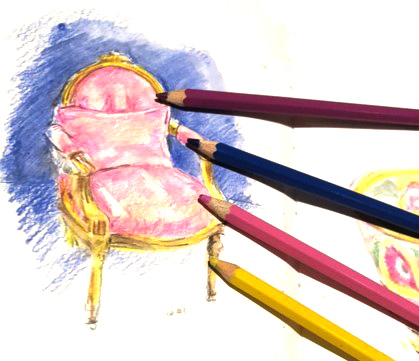
I sketch everyday, and it is part of my life. I discovered watercolour pencils in 2009 in Kate (Cathy) Johnson’s Watercolour pencil online course. From then I was in love with watercolour pencils and what they could do and that is my chosen medium. I use ink pen now and then, but never use a paint palette.

Today is Bastille Day and I thought that I would post my first travel sketchbook. It was a week in Paris in 2007 with some friends. I had been given a small pocket 13 x 9 cm Moleskine Van Gogh Museum sketch book. It is not watercolour paper, but I had not discovered watercolour pencils, so they are all graphite pencil, probably 2B.

Next week my blogpost will be my 2013 Sketchbook Project of reimagining my 2007 sketchbook with my 2013 knowledge and skills. See you then !

my sketches this week

I continued sketching my ranunculus last week as they opened.

all of sketches are in watercolour pencil

and some other sketches during the week

It was a cold Wintery week in Melbourne

On Saturday I held a class at The Johnston Collection.

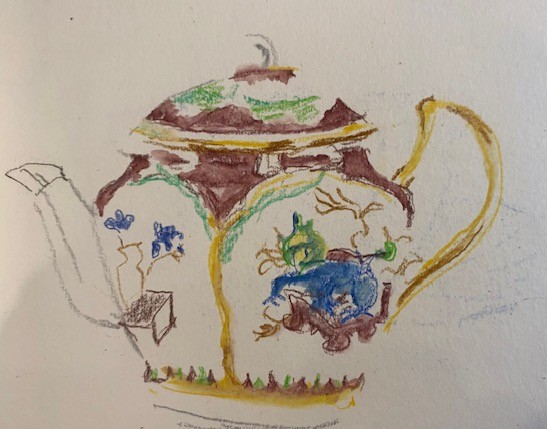
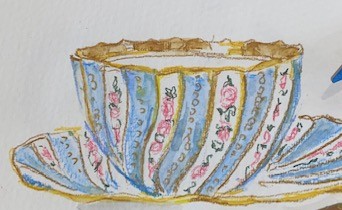
The day before the class I drew some of the objects from around my own apartment for practice.

The Johnston Collection is a house museum of Georgian fine and decorative arts in a historic Melbourne townhouse.

It is a unique opportunity for a small group to sketch ‘on location’ at The Johnston Collection. We start with a cup of tea or coffee, and become familiar with watercolour pencils and how to use them. Then we try out new skills and pencils and explore the ground floor rooms of The Johnston Collection’s exhibition house, Fairhall. Everyone selects objects to record in their sketchbook, and record their impressions.

No equipment or previous experience is required, a sketchkit is supplied on the day – just bring enthusiasm.

The current exhibition SWAGGER is inspired by interior decoration and the performance of fashionability, Swagger examines the life of an English gentleman of the 1700s and 1800s. Each room of Fairhall, an 1860s townhouse in East Melbourne, has been re-imagined to evoke the worlds of Regency rakes, dandies, military figures, and men of business and leisure.The adornment,  surroundings, and behaviour of fashionable gentlemen reveal their unique tastes and style. 

I filled in some time waiting for the class to arrive and sketched some of a frame of a painting in the room.

Here are some earlier sketches I did on location.

This event is supported by The Colin Holden Charitable Trust.

Everyone had a lovely time and had lots of questions to ask along the way. I think some of them may continue to be inspired and motivated to keep sketching when they got home.

I look forward to ongoing involvement with The Johnston Collection and to see ther next reinterpretation of the house in September.

green and pink sketches this week

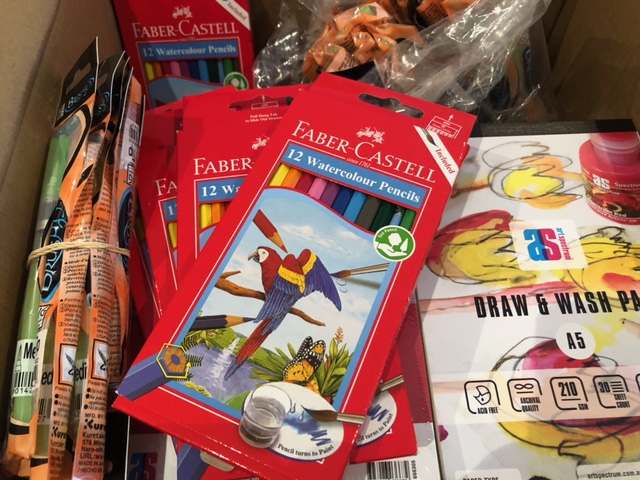
I dived into my box of 126 Faber Castell watercolour pencils to try to match the colours of my nail polish and shoe ribbons. I try to match these to wear with my black work outfit everyday.

While it is not important to have exact colour match when sketching, sometimes I like to.

I also have lovely vintage suit that I wore to Goodwood Revival last year. I have been wearing it this week and really wanted to try and capture it on paper. I also documented its history on the page.

The colours I experimented with were

  • Phthalo Green
  • Pine Green (in my sketchkit)
  • Helio Turquoise
  • Derwent Inktense Apple Green
  • Derwent InktenseTeal Green

Here are the Faber Castell greens and blues to choose from

I also just started sketching a beautiful big bunch of ranunculas (buttercups) today that I will continue with over the next few evenings after work.

Tonight it was all about exploring the colours and thinking about the page.

  • Magenta (in my sketchkit)
  • Rose Madder (in my sketchkit)
  • Middle Purple Pink

I like to scatter them across two pages in my Moleskine 13cm x 19 cm watercolour sketchbook. It is not a botanical art work and it will have that unfinished looked and some flowers won’t have water added to the pencil on the page

Nature Sketching with Watercolour Pencils at RBGV

I had another wonderful Nature Sketching with Watercolour Pencil class on Saturday at Royal Botanic Gardens of Victoria on Saturday. It was a very brisk 12 degrees (Celcius) and enough of a breeze to stay inside for the sketching. Usually the first 45 minutes are spend inside at the table learning about the pencils, paper, waterbrush and playing with pencils and then we go out to sketch. Not today.

On Saturday I bought the outside in by collecting leaves and taking cuttings from the plants around the cottage.

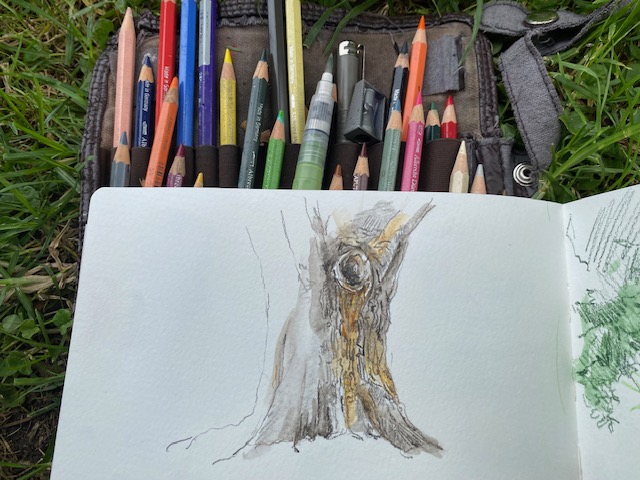
I have some of my sketchbooks out on the table open at a nature sketching page for people to look through to get an idea of my style. This is just one way that watercolour pencils can be used.Everyone likes to look through the other pages too, I think that it gives an idea of the sort of things that can be added to sketch journals.

On Saturday, all the participants had their own watercolour pencils. The pencils have often been in a cupboard for years. People come along for many varied reasons. They are from all backgrounds. Some have not done art since Primary school, other’s have different levels of experience with other mediums or work with textiles.
. My parting words in class are:

  • I hope I have motivated and inspired you to the wonderful world of Watercolour Pencils
  • Play with the pencils on the page. Find out what marks they make and what happens when you added water to the page.
  • Have your sketchboook and pencils on the desk or bench so that you can pick them up easily. If they are shut away in a drawer you will forget them.

Happy Sketching

International Nature Journaling Week

International Nature Journaling Week 1-7th June 2025
Conversations with Nature : This year the theme was exploring the conversations we have with the natural world.

Each day there were video interviews, presentations and a lot on contents on the website. This is their introduction to give you an idea

Explore the website – there is lots to discover! You can Start Here and then find out How to Participate in the week. There is a page for Parents & Teachers, one for the Reluctant Artist and a page on sharing the Written Word in our nature journal pages. On the Blog you will find posts from nature journalers around the world, sharing ideas and knowledge on different aspects of journaling. The Books & Inspiration page will point you to books and websites where you can learn more about nature journaling and nature connection. Sign-up to the newsletter to receive updates and ideas.

I had limited time this week and did not get to spend as long on each page as I hoped. I also found these themes very challenging as they were prompts for concepts and involved words.

Once I decided what to sketch I was in my comfort zone. But before I put watercolour pencil to paper I had to do a lot of thinking, processing and decision making.

Day 1 Describing the indescribable

Day 2 Playing with words

Day 3 Exploring nature through poetry

Day 4 Storytelling with nature

Day 5 Listening attentively

Day 6 Sensing the world around us

Day 7 Creating a vision for the future

Each year that I join in INJW I enjoy it. I learn so much about looking at nature and experiencing and ways to express it on the page. I only wish that I put more of this into practice in my daily sketchbook for the rest of the year.

See my previous years’ sketches here

INJW 2024 Exploring the natural processes within the cycle of life. Ithttp://alissaduke.com/2024/06/international-nature-journaling-week-3.html

INJW 2023 Sensory Safari http://alissaduke.com/2023/06/international-nature-journaling-week-part-2.html AND http://alissaduke.com/2023/06/international-nature-journaling-week-2.html

I have a Nature Sketching with Watercolour Pencil Class this coming Saturday at Royal Botanic Gardens of Victoria. I hope to pass some of this on.

My Pencil Sharpeners

A whole post on pencil sharpeners !? Is there really that much to say about them?

Yes!

I describe my sketching style as” the unfinished look” and “the impression of detail”. I give the impression of details by adding hard, fine lines with a sharp watercolour pencil to some areas of a drawing.

I also do longer, more studied drawings with my watercolour pencils. There is more emphasis on detail and subtle changes in texture, colour and line. A sharp pencil is needed for these.

Every day I carry a single Staedler pencil sharpener in my sketchkit and it works well.

Be aware that not every pencil will fit into every pencil sharpener. I had assumed they would until I bought one while on holidays that didn’t and now I test my pencil in the shop.

I also have a dual Staedler two pencil sharper at home. One side ie Graphite and Colour (which I use for my watercolour pencils) and the other is Graphite.

I own a pencil sharpener that can be fixed onto the bench. It is like a school pencil sharpener. It can sharpen them to a ridiculous point (which breaks as soon as I touch it to the paper with even the slightest pressure). It is best not to sharpen them that much!

With these last two closed sharpeners the pencil tip sometimes breaks off in the sharpener which means the sharpener has to be taken apart for the piece to be dislodged. A bit frustrating.